Big Households, Hard-Working Appliances: What Wears Out First and How to Stay Ahead of It
Here’s a number that explains half the repair calls I run in Santa Ana: appliance engineers design a residential washer around roughly 6 to 8 loads a week. That’s the assumption baked into the bearing ratings, the suspension components, the motor duty cycle — everything.
Santa Ana has some of the largest average household sizes in Orange County. In a house with six or seven people, that washer isn’t doing 6 loads a week. It’s doing 12. Sometimes 15. Same machine, double the duty cycle. The math is simple and unforgiving: a washer rated for a 12-year service life at 6 loads a week hits the same cumulative wear in about 6 years.
Nothing is wrong with the machine. Nothing is wrong with the household. The machine is just being asked to do commercial work on residential parts. After 20 years of repairing appliances in this city, I can tell you exactly what gives out first — and which of those failures are cheap if you catch them early.
The Washer: Suspension First, Bearings Second
In a heavy-use home, the washer is always the first casualty.
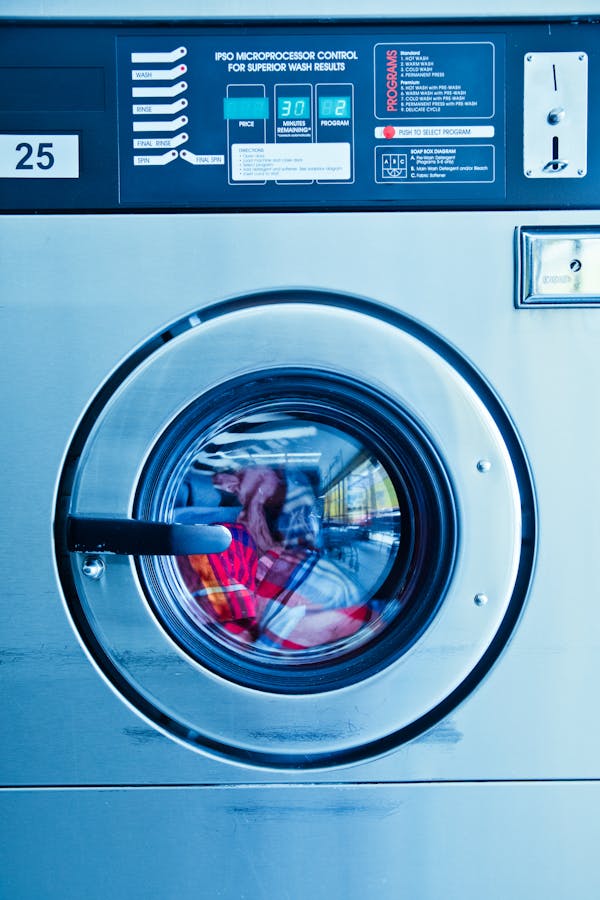
Suspension rods and dampers go first. On a top-loader, four suspension rods hold the tub. Every spin cycle flexes them. At 12+ loads a week, the rods lose their damping in 4 to 5 years instead of 8 to 10, and you get a machine that bangs and walks across the floor on every spin. The fix is a suspension rod kit — $40 to $60 in parts, and the whole repair usually lands between $180 and $250. Cheap.
Ignore it, and the violent spin cycles hammer the next component down the line: the tub bearing. A bearing replacement means tearing the machine down to the tub, and on many front-loaders the bearing is pressed into the outer tub shell, so you’re replacing the tub itself. Now you’re at $400 to $550, on a machine where replacement starts looking sensible. Same root cause. Ten times the bill. The banging washer was the warning.
Front-loader door boots wear faster too. More loads means more door cycles, more detergent residue, more trapped moisture. A boot that would stay clean for years in a two-person home grows mildew and develops tears in a busy one. Boot replacement runs $200 to $300. Wiping the boot dry after the last load of the day and leaving the door cracked open costs nothing.
One more thing on washers: check the leveling twice a year. A busy laundry room means the machine gets shoved, bumped, overloaded with comforters. A washer that’s a quarter-inch off level spins out of balance constantly, and every out-of-balance spin is bonus wear on those suspension rods. Thirty seconds with a bubble level and a wrench on the front feet.
The Refrigerator: Death by a Thousand Door Openings
A refrigerator in a large household gets opened 60 to 80 times a day. I’ve counted, roughly, sitting at customers’ kitchen tables filling out invoices. Kids after school, someone cooking, someone grabbing a drink, repeat.
Every opening dumps warm, humid air into the box. The compressor has to pull that heat back out. So instead of cycling maybe 40% of the time, the compressor in a busy kitchen runs 60% or more — especially in July and August when the kitchen itself is 85 degrees. Compressors are rated in run-hours. You do the arithmetic.
You can’t stop people from opening the fridge. What you can do:
Watch the door gasket. Eighty openings a day means eighty closings, and gaskets take the abuse. A torn or flattened gasket lets warm air leak in continuously, which is worse than the door openings themselves. The dollar-bill test: close the door on a bill. If it slides out with no resistance, that section of gasket is done. Gasket replacement is $150 to $250 depending on the model. A compressor is $600 to $1,200. The gasket protects the compressor.
Check for hinge sag. Heavy door bins loaded with gallon jugs, opened dozens of times daily, will wear the hinge and sag the door out of alignment. A sagging door doesn’t seal at the top corner. You can often see the gap. Hinge adjustment or replacement is one of the cheapest fridge repairs there is — frequently under $150.
Clean the condenser coils every four months, not every year. Higher compressor run time means the coils matter more. Dusty coils in a hard-running fridge is how compressors die young.
The Range: Two Meals a Day, Every Day
A range in a big household cooks breakfast and dinner daily, plus weekend everything. That’s roughly double the ignition cycles and oven heat cycles of the “average” home the parts were rated for.
Gas igniters are the classic wear item. An oven igniter is rated for a certain number of cycles, and it degrades gradually — the oven takes longer and longer to light before one day it doesn’t. If your oven has started taking 60 or 90 seconds to ignite instead of 15, the igniter is telling you something. Replacement runs $150 to $250 and it’s one of the most routine repairs we do. Surface burner igniters that click endlessly or won’t spark are usually even cheaper, unless the real culprit is boiled-over food in the burner base — clean those regularly.
Electric oven elements live a similar life. Every bake cycle expands and contracts the element. Double the cycles, half the calendar life. When an element fails you’ll usually see visible blistering or a bright spot before it burns through. Element replacement: typically $150 to $220.
The maintenance here is mostly cleanliness. Grease buildup around burners shortens igniter life, and a range that’s cooking twice a day accumulates grease at twice the rate. Degrease the burner area monthly.
The Dryer: The One That Can Actually Hurt You
Everything above costs money. A neglected dryer vent can cost you the house.
Standard advice says clean the dryer vent once a year. At 12 to 15 loads a week, that’s not enough. Twice a year, minimum. Lint accumulates in proportion to loads dried, and a restricted vent does two things: it stretches drying times (more run-hours, more wear on the heating element, the thermal fuse, and the drum rollers), and it creates the single most common appliance fire hazard I see in the field.
The tell is simple. If towels take two cycles to dry, or the top of the dryer is hot to the touch, or the outside vent flap barely flutters when the dryer runs — the vent is restricted. Blown thermal fuses from overheating are a $120 to $180 repair that a $20 vent brush would have prevented. Worn drum rollers and glides from sheer load count run $180 to $280. Both are announced well in advance by squealing or thumping. Listen to the machine.
The Pattern
Notice what all of this has in common. The expensive failures — tub bearings, compressors, control boards cooked by overheating — are almost always downstream of a cheap failure that got ignored. The suspension rods before the bearing. The gasket before the compressor. The vent before the thermal fuse.
Heavy use doesn’t have to mean short appliance life. It means the maintenance calendar runs at double speed, same as the machines do. Clean the coils in months, not years. Do the vent twice. Take the banging and squealing seriously, because at your duty cycle, “I’ll deal with it later” arrives sooner than you think.
And when something does start making noise, call us at (714) 252-4115. Catching a $200 problem before it becomes a $500 one is most of what we do.